
Study Programs
Motorcycle Business Engineering
TBSM
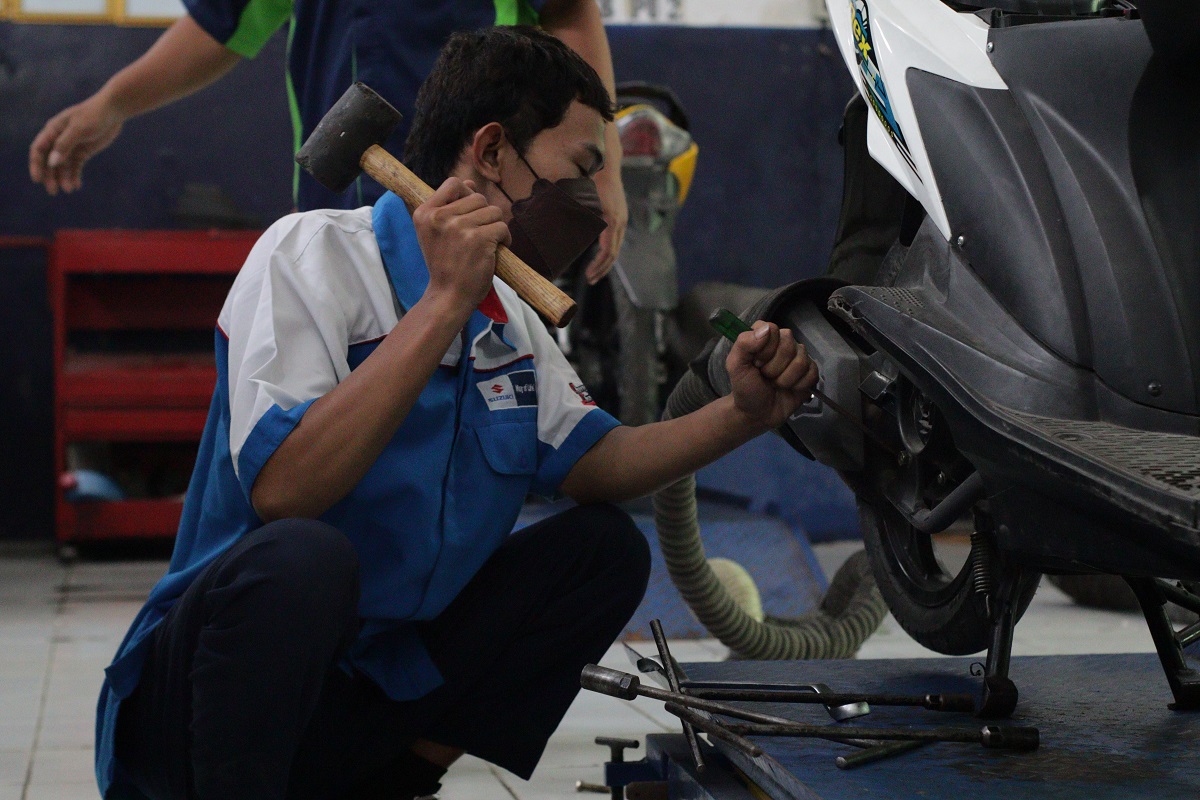
Getting to Know the Motorcycle Engineering and Business (TBSM) Major
Motorcycle Engineering and Business (TBSM) is a specialized field of study that focuses on the skills of providing mechanical services to two-wheeled vehicles. This major is designed to produce technicians who are not only skilled in dismantling and repairing motorcycles, but also possess a keen understanding of developments in two-wheeled automotive technology and the fundamentals of workshop management.
The massive motorcycle population in Indonesia makes this field a highly sought-after field of expertise. With the advancement of technology, TBSM students learn not only about carburetors and two-stroke engines, but also focus on injection technology (PGM-FI, YMJET-FI, etc.), intelligent braking systems (ABS/CBS), smart key systems, and even a basic introduction to electric motorcycles (EVs).
What Competencies Are Studied?
TBSM students receive intensive theoretical and practical training in the school's workshop. The following are the main pillars of material they will master:
Motorcycle Engine Maintenance
Performing regular maintenance (tune-ups) on underbone, sport, and automatic motorcycles (scooters).
Dismantle, analyze damage, and reassemble major engine components (overhaul).
Maintain and repair manual and automatic transmission (CVT) systems on automatic motorcycles.
Motorcycle Electrical Maintenance
Understand electrical diagrams, ignition systems, battery charging systems, and starter systems.
Maintain body electrical components such as lights, horns, and digital instrument panels.
Diagnose fuel injection system failures using scanners (FID/HIDS/Scanner) to read sensors on modern motorcycles.
Chassis and Powertrain Maintenance
Maintain and repair braking systems (drum, hydraulic disc, and ABS/CBS).
Repair and adjust suspension systems (shock absorbers) and steering systems (steering).
Carry out wheel maintenance, tire replacement, and chain adjustment.
Business and Workshop Management (Entrepreneurship)
Learn about spare parts management.
Understand standard operating procedures (SOPs) for customer service in a repair shop.
Calculate estimated repair costs and the basics of starting an independent repair shop.
Motorcycle Engineering and Business (TBSM) is a specialized field of study that focuses on the skills of providing mechanical services to two-wheeled vehicles. This major is designed to produce technicians who are not only skilled in dismantling and repairing motorcycles, but also possess a keen understanding of developments in two-wheeled automotive technology and the fundamentals of workshop management.
The massive motorcycle population in Indonesia makes this field a highly sought-after field of expertise. With the advancement of technology, TBSM students learn not only about carburetors and two-stroke engines, but also focus on injection technology (PGM-FI, YMJET-FI, etc.), intelligent braking systems (ABS/CBS), smart key systems, and even a basic introduction to electric motorcycles (EVs).
What Competencies Are Studied?
TBSM students receive intensive theoretical and practical training in the school's workshop. The following are the main pillars of material they will master:
Motorcycle Engine Maintenance
Performing regular maintenance (tune-ups) on underbone, sport, and automatic motorcycles (scooters).
Dismantle, analyze damage, and reassemble major engine components (overhaul).
Maintain and repair manual and automatic transmission (CVT) systems on automatic motorcycles.
Motorcycle Electrical Maintenance
Understand electrical diagrams, ignition systems, battery charging systems, and starter systems.
Maintain body electrical components such as lights, horns, and digital instrument panels.
Diagnose fuel injection system failures using scanners (FID/HIDS/Scanner) to read sensors on modern motorcycles.
Chassis and Powertrain Maintenance
Maintain and repair braking systems (drum, hydraulic disc, and ABS/CBS).
Repair and adjust suspension systems (shock absorbers) and steering systems (steering).
Carry out wheel maintenance, tire replacement, and chain adjustment.
Business and Workshop Management (Entrepreneurship)
Learn about spare parts management.
Understand standard operating procedures (SOPs) for customer service in a repair shop.
Calculate estimated repair costs and the basics of starting an independent repair shop.